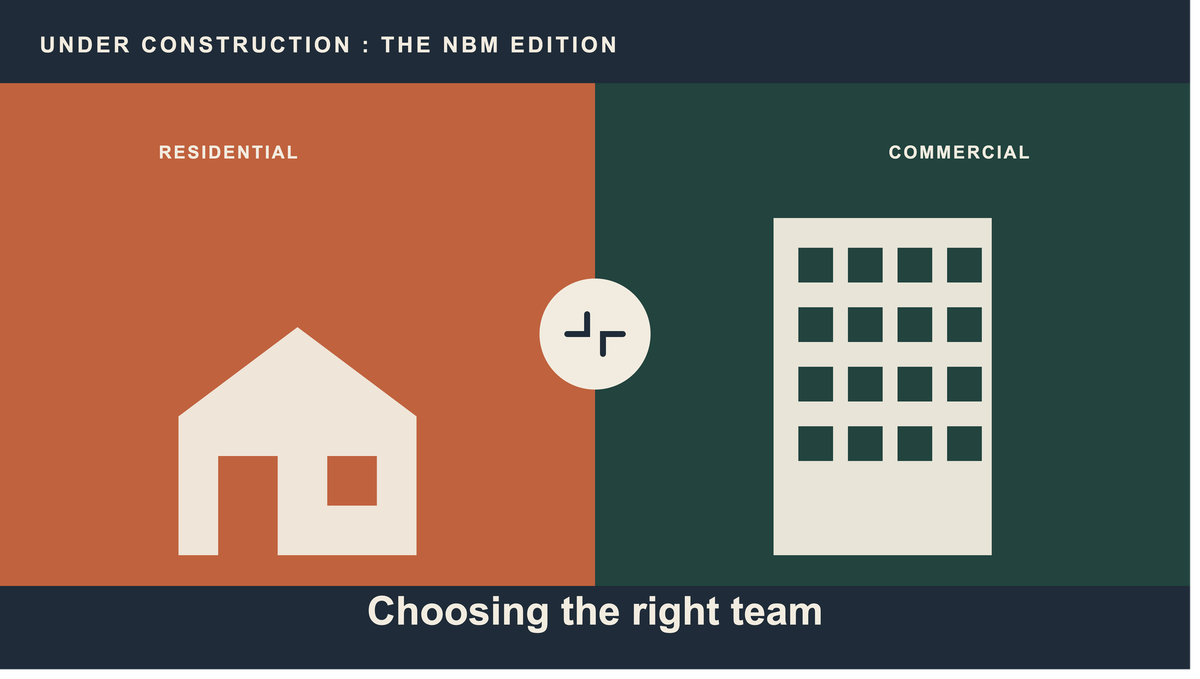
Choosing the right team: the decision that determines everything else
Every project succeeds or struggles based on a decision that gets made before a single permit is pulled: who's going to build it.
Owners often treat this decision as a formality. Get a few bids, pick a number that feels reasonable, sign a contract, move on. But the team you select doesn't just determine your price. It determines your communication, your risk exposure, and honestly, your stress level for the next several months or years.
Here's how this plays out differently depending on the kind of project you're building, and why the underlying problem is exactly the same either way.
The residential scenario
A family is building a custom home. They've fallen in love with a builder through a referral, a beautiful portfolio, and a friendly first meeting. The builder seems like a genuinely good person, and frankly, they are.
What the family didn't ask: How many projects of this size and complexity has this builder actually completed? What does their subcontractor bench look like for the specialty trades this house requires? How do they handle change orders, and what's their actual track record on schedule, not just their promise?
Three months in, the family discovers the builder is excellent at smaller renovation work but has never managed a ground-up custom build of this scale. The subcontractors are solid individually, but nobody is coordinating them well. Decisions are getting made reactively instead of proactively, and the family is now fielding daily phone calls about problems they don't have the expertise to solve.
This isn't a story about a bad builder. It's a story about a mismatch between the builder's actual experience and the project's actual demands, something that should have been identified during selection, not three months into construction.
The commercial scenario
A developer is building a 40,000 square foot mixed-use building. They run a competitive bid process, as they should, and select the General Contractor with the lowest number. The number looks great on the pro forma.
What the developer didn't weigh heavily enough: that GC's current workload, the experience level of the specific superintendent who'll actually run the job, and whether their bid was complete or missing scope that will resurface later as change orders.
Six weeks in, the assigned superintendent is clearly overextended across two other projects. RFIs are piling up. The "low bid" started showing its true cost the moment incomplete scope items began surfacing as change orders, each one negotiated from a position of weakness because the project is already underway.
Same root cause as the residential scenario: a selection process that optimized for the wrong variable, in this case price alone, without weighing experience, capacity, and team fit against the project's actual needs.
What a thorough selection process actually looks like
In both cases, the fix isn't complicated, but it requires discipline that owners often skip because they're excited to get moving.
Vet actual experience against actual project scope, not just general reputation. Ask who specifically will be running the project day to day, not just who's the principal that won the work. Check references with pointed questions about how the contractor handles problems, not just whether the final product looked good. Review the bid or proposal for completeness, not just the bottom line. A number that's missing scope isn't actually a lower price.
This is, frankly, one of the most valuable things an Owner's Representative does early in a project. Not picking the contractor for you, but making sure the selection is based on the right criteria, and that nothing important got rushed past in the excitement of getting started.
The team you select on day one is the team you're stuck with for the life of the project. That decision deserves more rigor than most owners give it.
What criteria do you weigh most heavily when selecting a builder or contractor? I'd be curious whether residential and commercial owners think about this differently.