When estate planning involves a property that needs to be sold, renovated, or transitioned
This scenario comes up constantly in estate planning conversations, and it's one where timing and execution matter just as much as the legal and financial structure around it.
A client is restructuring their estate. Maybe a property needs to be sold to fund a trust. Maybe a family member is going to take over a property and it needs work before that transition makes sense. Maybe a property is being prepared for sale as part of a broader plan to simplify an estate before it passes to the next generation.
In all of these cases, the legal and financial plan can be airtight, and the outcome can still go sideways because of what happens to the physical property in between.
I've seen estates lose real value because a property sat on the market longer than necessary, needing repairs nobody addressed in time. I've seen family transitions get tense because one sibling felt the property wasn't being prepared fairly before being divided or sold. I've seen renovation timelines blow past what an estate plan assumed, which created a cascade of delays in trust funding, distributions, or closing dates that planners and attorneys had carefully structured around a specific timeline.
These aren't legal failures or financial planning failures. They're execution gaps. Nobody was managing the physical reality of the property while the legal and financial pieces moved forward on their own schedule.
This is precisely where an Estate Operations Executive becomes valuable to a planning team, not as a replacement for the planner or the estate attorney, but as the person managing the property itself so the rest of the plan can execute on schedule.
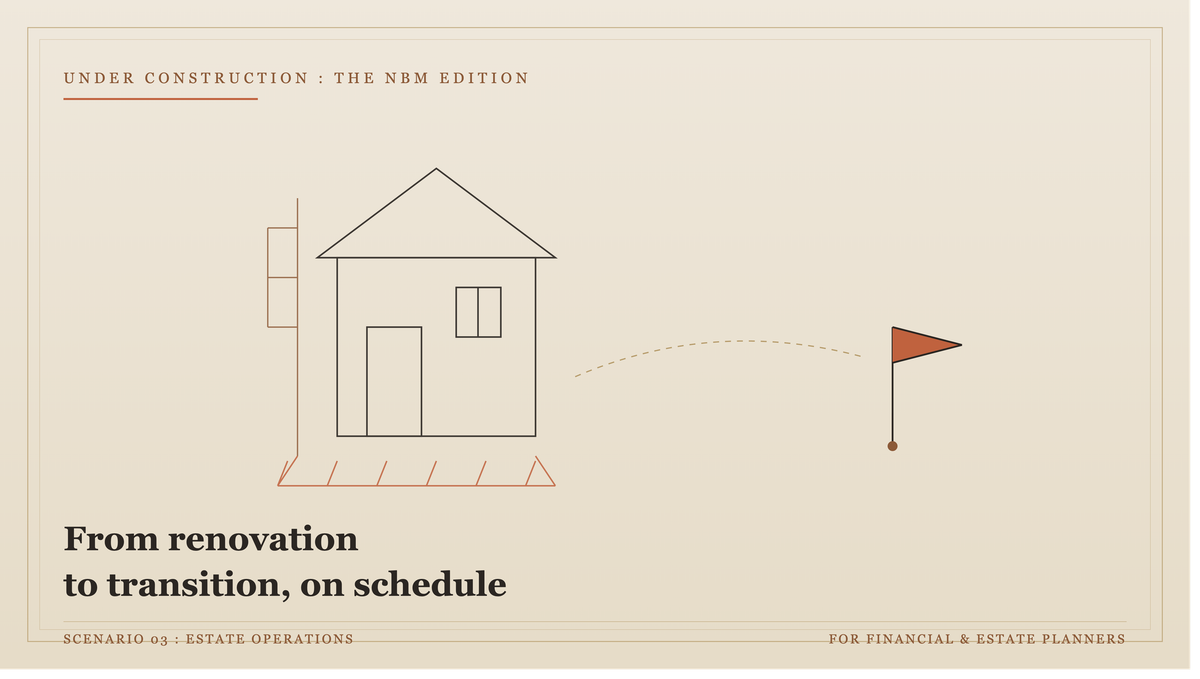
If a property needs to be sold, I get it into sellable condition efficiently: identifying what repairs actually move the sale price and which ones are unnecessary spending, managing contractors, and keeping the timeline realistic instead of optimistic. If a property is being renovated before a family transition, I manage that process directly so it doesn't become a source of family conflict or a financial surprise. If a property needs ongoing management before, during, or after a transition, I make sure it's being maintained properly the entire time so its value isn't quietly eroding while the legal process plays out.
For a planner or estate attorney, this means the timeline you've built into the estate plan is actually achievable, because someone competent is managing the one variable that's hardest to control on a spreadsheet: the physical condition and readiness of real property.
It also means fewer surprises landing on your desk mid-process. A roof issue discovered during a pre-sale inspection. A renovation that's three months behind. A property that needed to close in Q2 that isn't ready until Q4. These are avoidable, and avoiding them protects both the estate's value and the relationship between the planner, the client, and the client's family.
For planners: when a property needs to be sold, renovated, or transitioned as part of an estate plan, who's actually managing that property day to day while the legal and financial structure moves forward?