When a high-net-worth client owns multiple properties and nobody is watching all of them closely
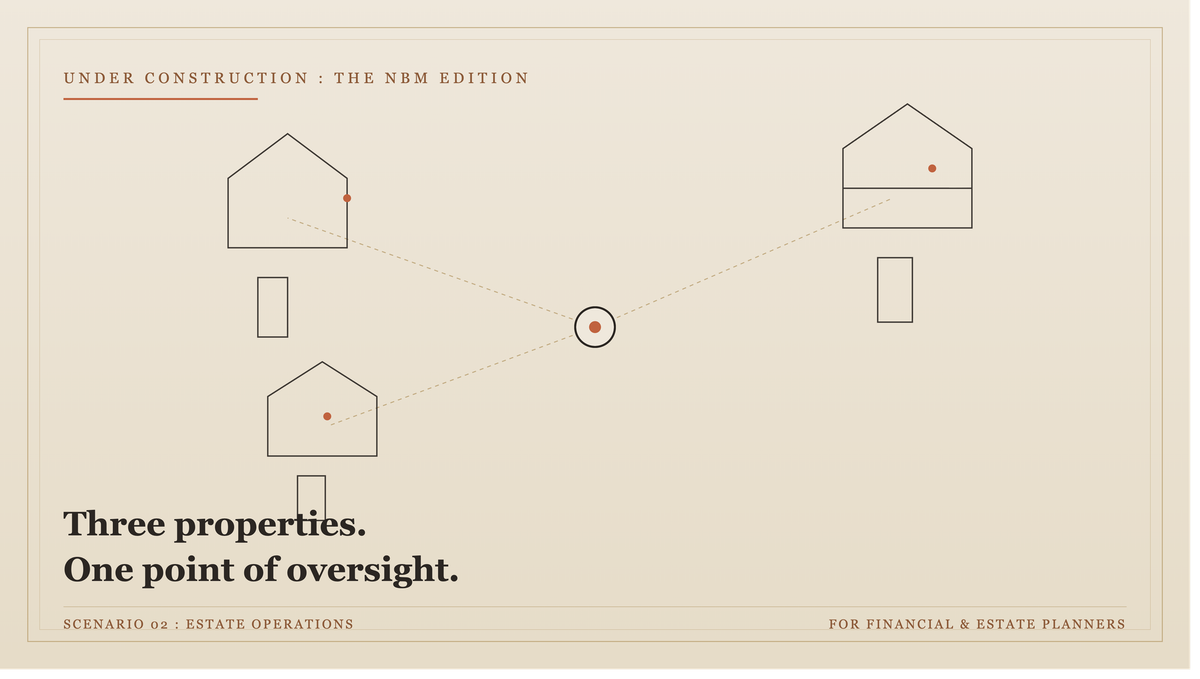
This scenario shows up with clients who've done well. Multiple properties. A primary residence, a second home, maybe an investment property or two, sometimes spread across different states.
On paper, this looks like exactly what it is: a sign of financial success. In practice, it creates a quiet operational risk that rarely gets discussed in a financial planning conversation, because it doesn't look like a financial problem until it suddenly is one.
Here's what I mean. A client with three properties typically has three different property managers, three different sets of vendors, three different standards of upkeep, and very little visibility tying it all together. One property might be meticulously maintained. Another might have a roof quietly deteriorating because nobody's looked at it in eighteen months. The client assumes everything is fine because nothing has gone wrong yet, which is a very different thing from everything actually being fine.
Then something does go wrong. A pipe bursts in the property nobody's visited in months. A tenant in the investment property files a complaint that's been building for a year. A contractor the client trusted for a renovation turns out to have been overbilling for two years, and nobody caught it because no one was checking.
At that point, it's not just an operational headache. It becomes a financial event. Emergency repairs, legal exposure, lost rental income, an unplanned six-figure expense that didn't exist in anyone's projections.
This is the role an Estate Operations Executive plays for a multi-property client: a single point of oversight across everything they own, regardless of how many separate managers or vendors are technically responsible for each piece.
I create one consistent standard across every property: regular inspections, a real maintenance calendar, vetted and accountable vendors, and a reporting structure that actually tells the client (and their planning team, where appropriate) what's happening before it becomes urgent. I catch the slow leaks (literal and financial) long before they show up as a surprise.
For a financial or estate planner, this changes the conversation in a meaningful way. Instead of building a plan around static asset values, you're working with a client whose properties are actively and competently managed. Fewer surprise expenses. Fewer emergency withdrawals to cover an unplanned repair. A much clearer picture of what these properties actually cost to hold, which makes every projection you build more accurate.
It also means that when a client asks you, their planner, "should I sell one of these?" or "is this property actually worth what I think it is?", there's a reliable operational answer sitting right next to your financial one.
For planners: do your high-net-worth clients with multiple properties have a single, consistent source of operational oversight, or is each property essentially being managed in isolation?